
A long distance move isn’t just a local move with a longer drive. Your things are on the road for days, the pricing works differently and there’s federal paperwork involved. Here’s how long distance moving from Nebraska actually works, so you know what to expect before you book anyone.
Long Distance, Interstate and In-State: Who Regulates What
- Moves that stay inside Nebraska (say, Omaha to Kearney) are regulated by the Nebraska Public Service Commission, which licenses household goods movers in the state.
- Moves across state lines (Omaha to Denver, or Bellevue to Texas) are interstate moves. Those fall under the federal Motor Carrier Safety Administration (FMCSA), and the mover needs a USDOT number.
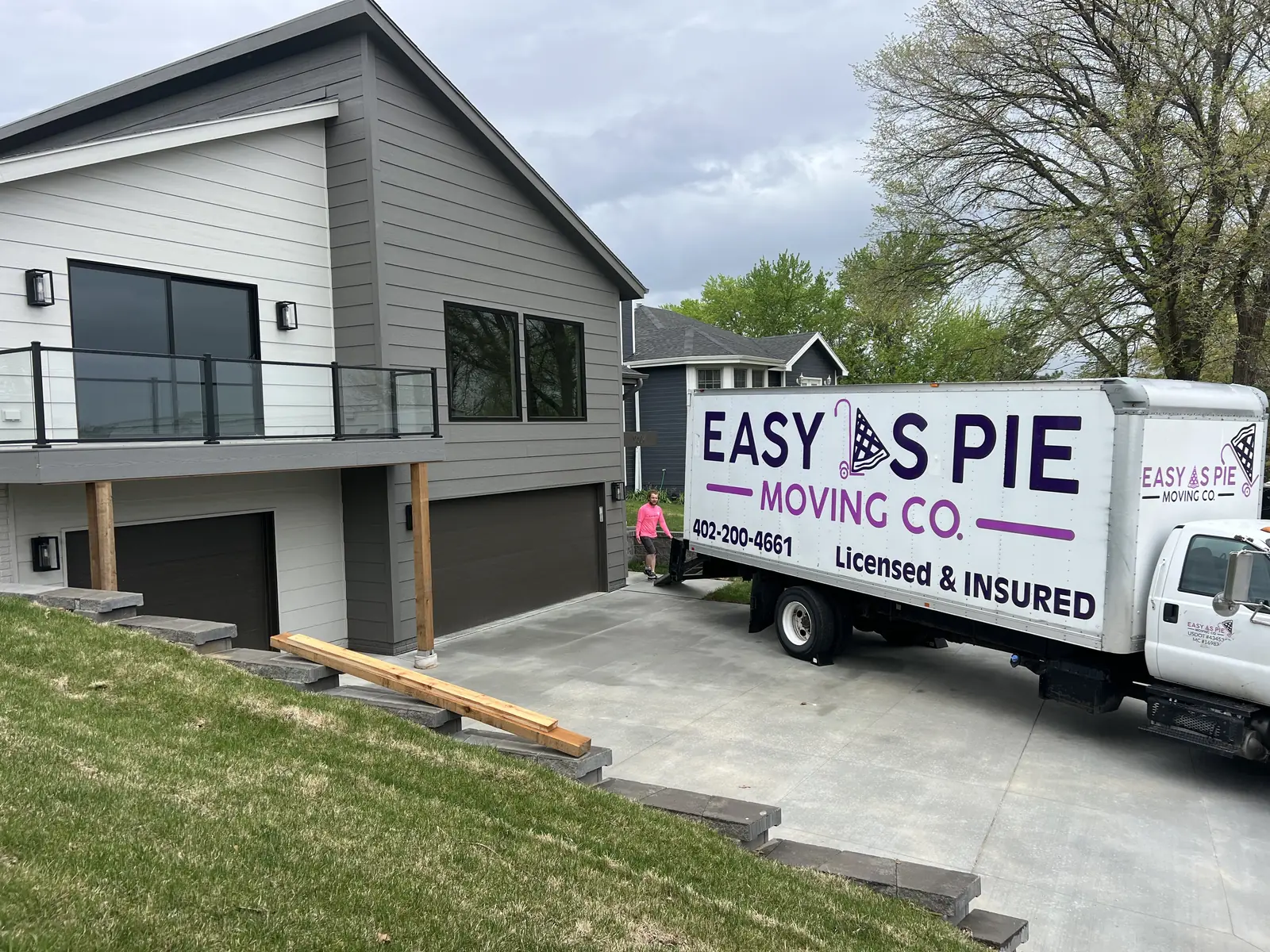
Easy As Pie Moving Co. is licensed and insured with federal authority to move households across state lines (USDOT 4345362). The rest of this guide focuses on interstate moves.
A Realistic Long Distance Moving Timeline
- 8 weeks out: Declutter first (long distance pricing depends heavily on how much you move), then request written estimates.
- 6 weeks out: Compare estimates and book your mover. With us, booking two weeks or more ahead locks in your preferred day and start time. Read the paperwork your mover sends.
- 4 weeks out: Decide on packing help, change your address and schedule utilities at both ends. Our moving checklist covers the rest week by week.
- 2 weeks out: Confirm your pickup date and delivery window, and arrange travel for your family and pets.
- Pickup day: Be home for the walkthrough and the inventory.
- Delivery: Be there (or have someone there) to check every item against the inventory before you sign.
How Long Distance Moves Are Priced
Local Omaha moves are billed by the hour. Long distance moves aren’t. Under federal rules, interstate moves on a non-binding estimate are charged by the actual weight of your shipment, and the FMCSA’s consumer booklet explains how that weight is measured: the truck is weighed on a certified scale before and after your things are loaded. You have the right to watch the weighing and to request a free reweigh before your things are unloaded.
What drives the price:
- How much you’re moving (weight or volume)
- How far it’s going
- How fast you need it there (shared truck or a dedicated one)
- Extra services like packing, crating or storage
Binding vs. Non-Binding Estimates
- Binding estimate: You can’t be required to pay more than the estimate at delivery for the items and services listed.
- Non-binding estimate: The final price is based on actual weight and services. At delivery, you can’t be required to pay more than 110% of the estimate. The mover can bill any remaining charges, but not until at least 30 days after delivery.
Easy As Pie gives every long distance customer a custom quote, and we’re happy to do an in-home or video walkthrough first so the price is built on what you’re actually moving. Whoever you hire, make sure the estimate covers everything you’re moving.
Consolidated vs. Exclusive Express
Easy As Pie offers two long distance moving options:
| Consolidated shipping | Exclusive express | |
|---|---|---|
| The truck | Shared with a few other customers | All yours |
| Dates | You’ll need to be available for a delivery window | You choose your pickup and drop-off dates |
| Route | Your items are labeled and tracked the whole way | Straight to your new home |
| Best for | Tighter budgets and flexible timelines | Tight timeframes and fixed move-in dates |
Not sure which fits? Ask yourself one question: can you live without your furniture for a little while, or do you need it on a specific day?
Delivery Windows, Explained
On many long distance moves, you get a delivery window (the FMCSA calls it a “delivery spread”) instead of a single day. Your shipment can arrive any time during that window, and the mover will usually give you about 24 hours’ notice before arriving, according to the FMCSA booklet.
If the mover can’t make the agreed pickup or delivery dates, it must notify you of the delay, in writing. And if a late pickup or delivery leaves you with expenses you wouldn’t otherwise have (like an extra hotel night), you may be able to recover them through a delay claim.
With consolidated shipping, you’ll need to be available for the delivery window. We set a delivery time with you and typically arrive within a few hours of it, depending on road conditions. With exclusive express, you pick the dates.
Need a gap between homes? Easy As Pie can pick up from your doorstep and keep things at our secure Omaha storage facility before the big move. See our storage guide.
Valuation: Released Value vs. Full Value Protection
Valuation is the mover’s level of liability if something is lost or damaged. It isn’t the same as insurance. For interstate moves, the FMCSA describes two options:
| Released Value Protection | Full Value Protection | |
|---|---|---|
| Cost | No extra charge | Varies by mover, sometimes with deductible options |
| Coverage | No more than 60 cents per pound, per article | The mover repairs the item, replaces it with a similar item or pays you for repair or replacement |
| Example | A 25-pound TV that’s destroyed pays $15 | That TV is repaired, replaced or paid for at replacement cost |
| Paperwork | You must sign a statement choosing it | It’s what you get if you don’t choose released value |
One catch with Full Value Protection: movers can limit their liability for items worth more than $100 per pound (think jewelry, china or furs) unless you list them on the shipping documents. If you own something valuable, write it down.
At Easy As Pie, your valuation coverage options are in your moving agreement, which you get when you book, so you can choose without anyone rushing you.
Your Rights: The Federal Moving Booklet
For interstate moves, your mover must give you two FMCSA publications: “Your Rights and Responsibilities When You Move” and the “Ready to Move” brochure (a copy or a link is fine). Read them. They explain:
- The bill of lading, your contract with the mover. Keep it until your things are delivered, the charges are paid and any claims are settled.
- The inventory, which lists every item and its condition. You and the mover sign each page.
- Claims. You have 9 months from delivery to file a loss or damage claim. The mover has 30 days to acknowledge it and 120 days to give you an answer.
- Arbitration. Interstate movers must offer an arbitration program for settling loss and damage disputes.
Check the Mover Before You Sign
Look up any mover’s USDOT number with the FMCSA’s mover search. You’ll see the company’s registration status, headquarters, safety information and complaint history. Red flags the FMCSA warns about include:
- A large deposit or cash demand before the move
- Being asked to sign blank documents
- No local address or insurance information on the website
- Claims that “all goods are covered by our insurance”
- A rental truck showing up instead of a company truck
For more, see our guide to choosing a moving company safely.
What to Keep With You (Not on the Truck)
Your things might be on the road for days, so pack a bag or two that rides in your car:
- Your bill of lading, inventory and moving agreement
- IDs, passports, and school or medical records
- Medications, jewelry, cash and other small valuables
- Laptops, phones and chargers
- Clothes and toiletries for a few days, plus sheets for the first night
- Pet food, leashes and vet records
Hazardous materials can’t go in your boxes without telling your mover. Federal law forbids it. Plan to use up or dispose of propane, gasoline, paint thinner and similar items before moving day.
Long Distance Moving FAQs
How is a long distance move priced?
Interstate moves are usually priced by the weight or volume of your shipment, the distance and the services you choose. Local moves within the Omaha metro are billed by the hour.
What’s the difference between consolidated and exclusive long distance moving?
With consolidated shipping, your things share a truck with a few other customers, which saves money but means a delivery window. With exclusive express, the whole truck is yours and you choose your pickup and delivery dates.
What is Released Value Protection?
It’s the free, minimum level of mover liability on interstate moves: no more than 60 cents per pound, per article. Full Value Protection costs more but covers repair, replacement or a cash settlement.
How do I know if a long distance mover is legit?
Check the company’s USDOT number on the FMCSA website, get a written estimate based on a look at your belongings and make sure you receive the “Your Rights and Responsibilities When You Move” booklet.
Ready to Plan Your Long Distance Move?
Easy As Pie Moving Co. will build a long distance plan around your budget and your timeline, send your moving agreement when you book and stay in touch from the first call to the last box. Want us to pack too? Add full packing, or choose Platinum Packing and we’ll unpack at your new home too.
Learn more about our long distance movers, request your free estimate or call (402) 200-4661.
