Moving tips
How to Pack for a Move, Room by Room
Packing is the part of moving that eats your evenings and every box in the neighborhood. Done in the right order, with the right boxes, it goes faster than you’d think and your dishes come out in one piece. Here’s how to pack for a move, room by room, from the crews who load packed homes around Omaha every week.
Get Your Packing Supplies First
Running out of tape at 11 p.m. is how good packing plans fall apart. Get everything before you start.
- Small boxes for books, canned food and anything heavy
- Medium boxes for kitchen items, toys, decor and electronics
- Large boxes for light, bulky things like bedding, pillows and lampshades
- Wardrobe boxes for hanging clothes
- Dish pack boxes, the extra-thick boxes made for kitchen breakables
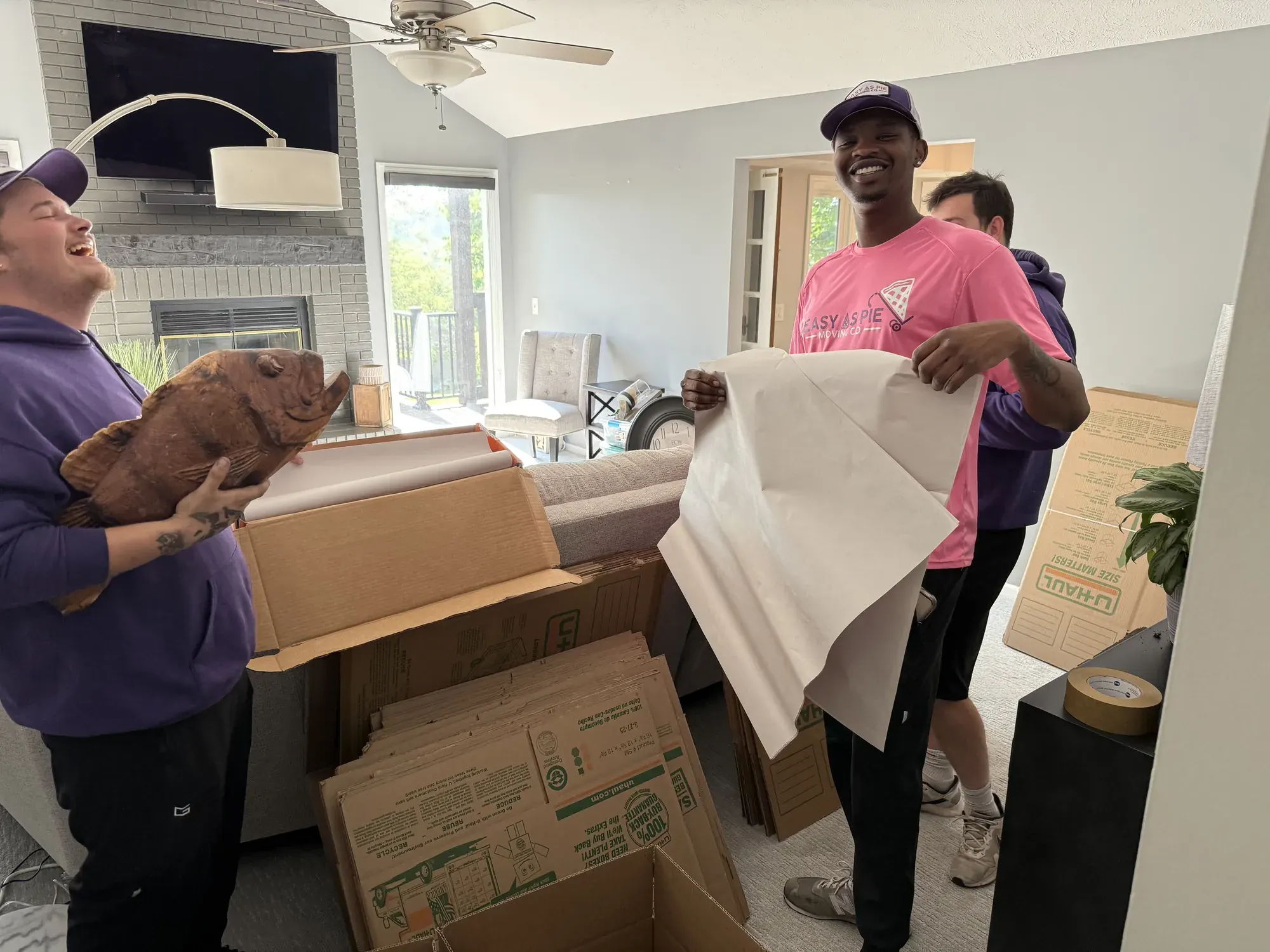
- Plain packing paper (newsprint ink rubs off on dishes) and bubble wrap
- Packing tape and a tape gun
- Markers and labels
- Stretch wrap for drawers and odd shapes
- Mattress bags
- Zip-top bags for screws and hardware
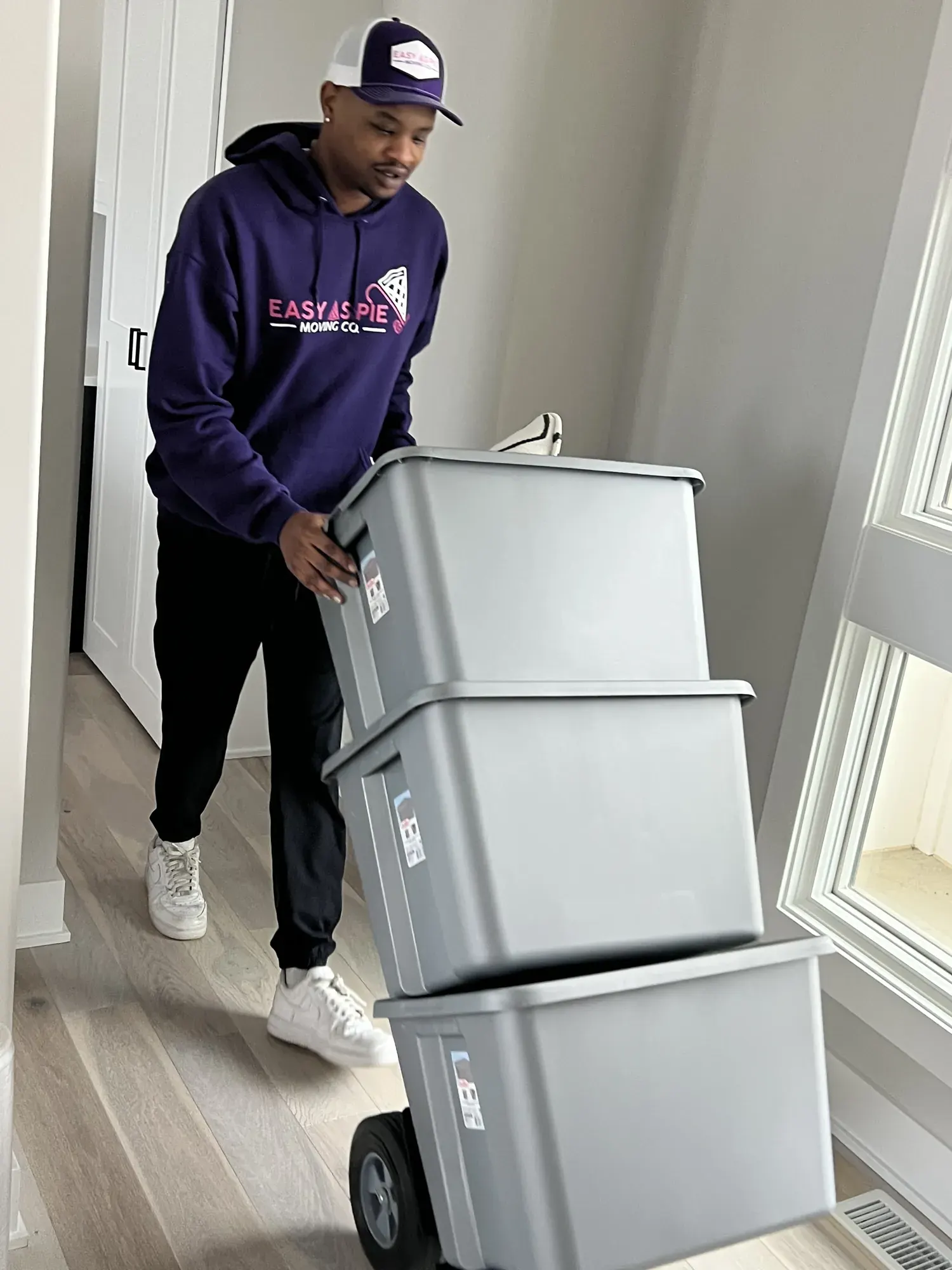
Don’t want to collect boxes? Rent plastic moving bins through our partner, Monster Totes. They stack evenly, need no tape and go back after the move. And when our crew does your packing, we bring the boxes and materials.
Make a Packing Plan
Give yourself a few weeks if you can. Packing always takes longer than people expect, especially the kitchen, the garage and the closets.
- Start three to four weeks out with the rooms and things you use least.
- Do one room at a time. Finish it before you start the next so boxes don’t get mixed.
- Pack a few boxes a day. A steady pace beats a lost weekend at the end.
- Leave the kitchen and bathrooms for last.
- Pack an essentials box for each person the night before, and keep it with you, not on the truck.
Our week-by-week moving checklist lays out the rest of the timeline, from booking movers to setting up utilities.
What to Pack First
Start with anything you won’t touch before moving day.
- Off-season clothes, coats and shoes
- Holiday decorations
- Books, photo albums and keepsakes
- Art, frames and wall decor
- The guest room and spare bedrooms
- Storage areas like the basement shelves and garage cabinets
- Extra linens and towels
Then work toward the rooms you use every day. The kitchen, bathrooms and the clothes you’re actually wearing go last.
Packing Tips That Save Time and Your Stuff
- Heavy things in small boxes, light things in big ones. If you can’t lift it comfortably, it’s too heavy.
- Fill every box. Empty space lets things shift and boxes crush. Fill gaps with paper, towels or linens.
- Tape the bottom twice. Run tape across the seam and then across the middle.
- Label two sides, not the top. Write the room and a short list of what’s inside, and mark fragile boxes clearly. Stacked boxes hide their tops.
- Number your boxes so you’ll know if one goes missing.
- Bag the hardware. Put screws and bolts in a labeled bag and tape it to the piece it came off.
- Lighten your dressers. You don’t have to empty them, but full drawers make a dresser heavy and can strain or crack the frame.
- Leave clothes on hangers. Use wardrobe boxes, or pull a garbage bag up over a bunch of hangers.
- Take photos of the cords behind your TV and computer before you unplug anything.
- Keep valuables with you. Jewelry, passports, important papers, medications and laptops ride in your car.
How to Pack Dishes
Dishes are where packing pays off or goes wrong. A few rules keep them in one piece.
- Use dish pack boxes or small, sturdy boxes. Big boxes of dishes get too heavy to carry safely.
- Line the bottom with crumpled packing paper.
- Wrap each plate on its own, then pack plates standing on their edges, like records. Standing plates handle bumps better than a flat stack.
- Wrap glasses one at a time and stuff a little paper inside each one. Pack them rim side up, near the top of the box.
- Nest bowls with paper between them.
- Fill every gap so nothing slides, then add a layer of paper on top before you tape it shut.
- Mark the box fragile on two sides, with the room.
Shake the box gently before you seal it. If you hear anything move, add more paper.
How to Pack a Kitchen
The kitchen is the room most people put off until the last night, and it’s the room that takes the longest. Start it about a week out.
- Pack what you rarely use first. Holiday platters, the bread machine, extra mugs, the good china.
- Cook down the freezer and pantry so you’re not moving half-empty jars.
- Wrap knives in a towel or cardboard and tape it, then label the bundle so nobody grabs it blind.
- Tape lids on spices and oils, and bag anything that could leak.
- Pack small appliances in their original boxes if you still have them, with cords tucked inside.
- Leave out a last-day kit. One plate, cup and set of utensils per person, a pan, dish soap and a towel.
If there’s one room worth handing off, it’s this one. The kitchen is the room people most often ask us to pack.
How to Pack a TV for Moving
- Use the original box if you kept it. TV makers like LG say that’s the best way to move a TV.
- Photograph the cords and label each one with tape before you unplug them.
- Take off the stand or wall mount and put the screws in a bag taped to the back of the TV.
- No box? Wrap the TV in a moving blanket, cover the screen with soft padding, then wrap the blanket with stretch wrap. Keep tape off the screen itself.
- Keep it upright. Best Buy says never to lay a flat screen down, since pressure on the screen can crack it.
Our crews pad and strap every piece on the truck, TVs included.
How to Pack Holiday Decorations
Decorations are some of the most fragile, oddly shaped things you own, and they’re usually first in the boxes.
- Lidded plastic totes beat cardboard for long-term storage. They stack, keep out moisture and keep pests off the wires.
- Wrap each ornament in tissue or bubble wrap, and use egg cartons or divided boxes for small ones. Heavy pieces go on the bottom.
- Wind each strand of lights loosely around your forearm or a piece of cardboard, tie it and give it its own bag. Test them first and toss strands with frayed wires.
- Keep heirlooms in their own bin and let it ride with you instead of on the truck.
- Moving in November or December? Pack one small box with the tree stand, a strand of lights and a few favorites so you can still decorate.
What Not to Pack on the Moving Truck
Movers can’t take hazardous materials, and packing them without telling your mover can limit what the mover is responsible for. FMCSA lists flammable liquids, compressed gases, corrosives, poisons and explosives. In a typical home that means:
- Propane tanks, gasoline and lighter fluid
- Paint, paint thinner and stain
- Aerosol cans, including spray paint and spray snow
- Pool chemicals, bleach and strong cleaners
- Fireworks
Use them up, give them away or drop them off for safe disposal. Douglas and Sarpy County residents can take household chemicals to Under the Sink at 4001 South 120th Street.
Pack It Yourself or Hire Packers?
Packing yourself costs less in cash. Hiring packers saves your time and cuts the risk of broken dishes. Here’s the honest tradeoff.
| Pack yourself | Hire packers | |
|---|---|---|
| Cash cost | Materials only | Labor plus materials |
| Your time | Evenings and weekends, spread over weeks | A few hours of answering questions |
| Risk of breakage | Higher, especially dishes and glass | Lower, with the right materials |
| Damage claims | Harder for boxes you packed | No question about who packed it |
That last row matters. FMCSA warns that if things you packed yourself get damaged, it may be harder to establish your claim against the mover. Forbes estimates professional packing adds about $300 to $2,000 to a move, depending on how much you have.
You don’t have to choose all or nothing. Our packing services have no minimum, so you can hand us just the kitchen and the breakables and do the rest yourself. Want it all handled? Our start-to-finish white glove service packs everything and unpacks it at the new place. We get the best results packing the day before the move, which keeps moving day smooth.
Pack With Less Waste
- Use what you already have. Suitcases, laundry baskets and storage totes are free moving boxes, and towels and sheets make good padding.
- Rent plastic bins instead of buying cardboard.
- Get boxes secondhand from neighbors, Buy Nothing groups or Facebook Marketplace, then pass them on when you’re unpacked.
Recycling Boxes and Packing Material in Omaha
When the boxes are empty, here’s where things go in the City of Omaha.
- Cardboard goes in your green recycling cart, flattened. Tape and staples are fine, and recyclables shouldn’t be bagged, per the city’s recycling guide. A whole house of boxes won’t fit in one cart, so take the extra to a city recycling drop-off site.
- Bubble wrap, foam peanuts, air pillows and plastic wrap go in Omaha’s orange bag program, not loose in the cart. Hefty is ending its national program, but Omaha’s local processor said it plans to keep orange bag recycling going. Check Keep Omaha Beautiful for the latest.
- Paint and chemicals go to Under the Sink, never the cart or the drain.
Live in Papillion, Bellevue, La Vista or Council Bluffs? Your city or trash hauler may have different rules.
Packing FAQs
What should I pack first when moving?
Things you won’t need before moving day. Off-season clothes, holiday decorations, books, decor, guest rooms and storage areas go first. The kitchen and bathrooms go last.
How long does it take to pack a house?
Longer than most people plan for. Start three to four weeks out and pack a few boxes a day. The kitchen alone can take a full day.
What’s the best way to pack plates for moving?
Wrap each plate on its own and stand plates on their edges in a dish pack or small sturdy box, with crumpled paper on the bottom, between them and on top.
Can I leave clothes in my dresser?
Light clothes, yes. Just lighten the drawers so the dresser isn’t too heavy, and wrap the drawers shut with stretch wrap.
Is it cheaper to pack yourself?
In cash, yes. But count your time, the risk of breakage and the extra hours on moving day if the crew arrives before you’re done.
Want Help With the Packing?
Tell us what you want packed, from one room to the whole house, on our free estimate form, and we’ll build the crew and the day around it. It’s the easiest slice of the move to hand off.
Prefer to talk it through? Call (402) 200-4661.