
Moving to Omaha from Out of State: 2026 Complete Guide
Moving to Omaha from out of state brings you to a city that balances affordability with opportunity. This guide covers everything from housing and jobs to utilities and moving logistics for a smooth transition to Nebraska’s largest city.
The past few years have seen more families and professionals discovering what locals already know: Omaha offers a quality of life that’s hard to match. Your commute won’t drain two hours from your day. Your paycheck stretches further. And the neighborhoods feel like actual communities rather than anonymous suburbs. Whether you’re moving from Denver to Omaha for a job transfer or relocating from Chicago seeking more affordable housing, this new residents Omaha guide walks you through exactly what to expect and how to prepare.
Understanding Omaha: Housing, Cost of Living, and Neighborhoods
The housing market in Omaha offers a refreshing change if you’re coming from either coast. The median home price sits well below the national average, and rent for a two-bedroom apartment typically runs $1,000 to $1,400 monthly depending on location. That’s real money saved compared to what you’d pay in Denver, Chicago, or any major metro area.
Omaha’s neighborhoods each have distinct personalities. West Omaha draws families with newer construction, excellent schools, and easy highway access. The Old Market downtown appeals to young professionals who want walkable restaurants and nightlife. Midtown offers historic homes with character and mature trees. Dundee and Benson blend funky local shops with neighborhood bars and solid housing stock.
The cost of living extends beyond housing. Groceries, utilities, and gas all trend lower than the national average. Property taxes in Nebraska run higher than some states, but your overall monthly expenses typically balance out favorably. Working with local Omaha moving services helps because they understand which apartment complexes require elevator reservations, which HOAs have strict moving hour rules, and how to navigate tight parking in historic neighborhoods.
You can learn more about what it’s like to live and work in Omaha through resources that highlight commute times, school districts, and lifestyle amenities that make this city attractive to newcomers.
Job Market and Economic Opportunity
Omaha’s economy doesn’t rely on a single industry, which creates stability most cities envy. Finance and insurance anchor the market with major employers including Berkshire Hathaway, Mutual of Omaha, and TD Ameritrade (now part of Charles Schwab). Healthcare continues expanding with several hospital systems and research facilities. Technology companies have established operations here, drawn by lower costs and quality talent from local universities.
The logistics and transportation sector thrives given Omaha’s central location. Manufacturing maintains a steady presence. Even if your field doesn’t match these industries exactly, the diverse economy typically offers adjacent opportunities. Unemployment rates in the metro area consistently run below national averages.
Professional networks here prove surprisingly accessible. Unlike coastal cities where everyone seems guarded and transactional, Omaha’s business community tends toward genuine connection. Join an industry association, attend a few chamber events, and you’ll build relationships quickly. For detailed information on Omaha’s major industries and employers, the chamber provides current data on job growth projections and hiring trends.
Utilities, Services, and Setting Up Your New Life
Getting utilities connected represents one of those tasks that sounds simple until you’re actually doing it while unpacking boxes. Here’s your relocation checklist Omaha to tackle in the first week:
Essential Utility Setup:
Electricity
Metropolitan Utilities District (MUD) handles both. You'll set up a single account for gas and water service. First-time customers might need to pay a deposit.
Cox, CenturyLink, Google Fiber, and Verizon 5G Home Internet serve most areas. Check what's available at your specific address because coverage varies by neighborhood. Google Fiber offers the fastest speeds but isn't everywhere yet.
Usually included with city services or through your landlord. The city provides large bins for both trash and single-stream recycling picked up weekly.
You have 30 days to get a Nebraska driver's license after establishing residency. The DMV requires proof of identity, Social Security number, and two documents showing Nebraska residency. Vehicle registration happens simultaneously.
| Task | Provider/Location | Timeline | What You Need |
|---|---|---|---|
| Electricity | OPPD | 48 hours notice | Service address, move-in date |
| Gas/Water | MUD | 48 hours notice | Service address, ID, possible deposit |
| Internet | Cox/CenturyLink/Google Fiber | 1-2 weeks | Service address, equipment install appointment |
| Driver’s License | Nebraska DMV | Within 30 days | Proof of identity, SSN, 2 residency documents |
| Vehicle Registration | County Treasurer | Within 30 days | Title, insurance, inspection (if applicable) |
A comprehensive guide to setting up utilities in Omaha from local financial institutions can provide additional details on deposits, average costs, and connection timeframes.
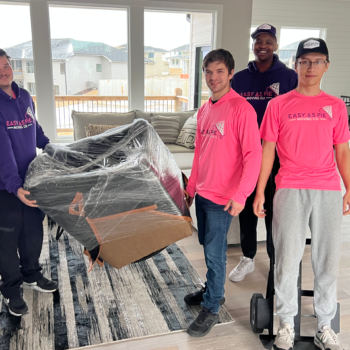
Don’t forget to schedule your final delivery and in-home setup with Easy As Pie’s long-distance moving services. Coordinating your arrival time with utility connections prevents that frustrating scenario where you’re sitting in a dark, cold house surrounded by boxes.
Out-of-State Moving Logistics and Long-Distance Expertise
An interstate move to Nebraska differs from a local move in ways that catch people off guard. The timing becomes critical when you’re coordinating across hundreds of miles. Weather factors in differently when your belongings spend 8 to 12 hours on the road. And state-specific regulations around permits, insurance, and documentation require attention.
Moving from Denver to Omaha means planning around Colorado’s mountain weather in winter months and I-80 conditions. The drive spans about 550 miles, typically a single long day for moving trucks. Summer moves face less weather risk but higher demand for movers, so book early.
Chicago to Omaha movers navigate roughly 470 miles through Iowa. The route stays relatively flat, but spring storms and winter conditions can delay schedules. Out of state movers to Omaha who specialize in Midwest routes know which travel dates to avoid and build buffer time into delivery windows.
Working with a single dedicated moving company rather than brokers who subcontract reduces headaches dramatically. You get one point of contact who knows your timeline, understands your concerns, and manages the entire process. When something changes, you’re not calling three different numbers trying to track down your furniture.
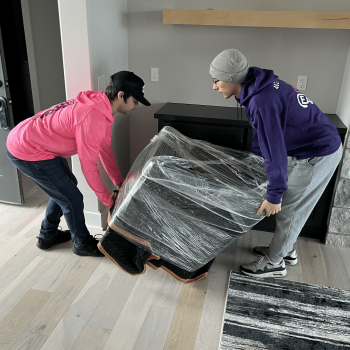
Professional movers handle logistics like coordinating building access at both ends, securing parking permits in urban areas, and protecting your belongings through temperature changes and road vibration. They’ve done the Denver to Omaha route or the Chicago to Omaha corridor dozens of times. That experience shows up in how efficiently they load the truck and how undamaged your furniture arrives.
Check out this long-distance moving checklist that covers everything from decluttering before the move to verifying insurance coverage. Planning reduces stress, and having professionals manage the heavy lifting literally and figuratively lets you focus on getting settled in your new city.
Your Complete Moving to Omaha Checklist
Pull this together in the months before your move:
- Research neighborhoods online and visit if possible before committing to housing
- Line up job prospects or confirm your transfer details with your employer
- Book out of state movers to Omaha at least 4 to 6 weeks in advance, earlier during summer
- Notify utility providers at your current location and schedule connections in Omaha
- Register children for school if applicable and transfer medical records
- Plan your move-in day timeline around utility connections and mover arrival
- Update your address with banks, insurance, subscriptions, and voter registration
- Schedule DMV appointments for license and vehicle registration within your first month
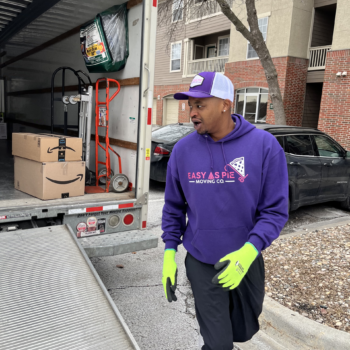
Easy As Pie coordinates long-distance moves into Omaha and throughout Nebraska, including nearby Lincoln. Our team knows the routes, understands the local requirements, and keeps your belongings safe across state lines. The difference between a stressful interstate move and a smooth transition often comes down to working with movers who specialize in exactly what you need.
Ready to plan your move to Omaha? Request a quote today and talk through your specific timeline and requirements. Moving to a new state brings enough change without adding unnecessary stress to the logistics. Let us handle the heavy lifting while you focus on starting your new chapter in Nebraska.
Schools and Education for Families
Omaha Public Schools serves most of the metro area with 80-plus elementary, middle, and high schools. The district gets mixed reviews depending on which specific school your address feeds into, so research your zone before signing a lease. Westside Community Schools and Millard Public Schools consistently rank among the top districts in Nebraska and draw families to west Omaha suburbs.
Private and parochial options exist throughout the city. Creighton Prep, Duchesne Academy, and Brownell Talbot offer college prep programs. Tuition runs significantly lower than private schools in major metros. The University of Nebraska Omaha anchors higher education locally, along with Creighton University, which brings both academic resources and Division I basketball energy to the community.
Register your kids early if you’re moving during the school year. Most districts require proof of residency, immunization records, and transcripts from previous schools. Summer moves give you breathing room to handle registration without rushing.

Weather Realities and Seasonal Preparation
Omaha experiences all four seasons with enthusiasm. Summers hit 85 to 95 degrees with humidity that reminds you this isn’t the dry West. Thunderstorms roll through regularly, sometimes severe with hail and tornado warnings. Keep a weather radio or reliable phone alerts active during spring and summer months.
Winters average 20 to 35 degrees but can drop below zero for stretches in January and February. Expect 25 to 30 inches of snow annually. The city handles snow removal efficiently on main roads, though residential streets can take a day or two. Invest in a good snow shovel, ice scraper, and warm coat. Your California wardrobe won’t cut it here.
Spring brings the most unpredictable weather with rapid temperature swings. You might see 70 degrees one day and snow the next. Fall stays beautiful through October with comfortable temperatures and changing leaves, making it genuinely pleasant before winter arrives.
Getting Around: Transportation and Commute Life
Most Omaha residents drive. The city sprawls enough that walking or biking works only if you live and work in specific neighborhoods like downtown or midtown. Rush hour exists but rarely approaches the nightmare you’ve experienced in larger cities. A 25-minute commute from west Omaha to downtown during peak traffic counts as long here.
Metro Area Transit operates bus service throughout Omaha and Council Bluffs, though routes and frequency don’t match what you’d find in cities with robust public transit. The system serves essential needs but won’t replace car ownership for most people. Park and ride lots exist along major corridors.
The Omaha Streetcar project currently under development will eventually connect downtown with midtown and the university area. Bike lanes have expanded in recent years, and trail systems like the Keystone Trail offer recreational options. Eppley Airfield provides direct flights to major hubs, making business travel and vacations straightforward despite Omaha’s central location.
Local Culture and What Makes Omaha Different
Omaha surprises newcomers with its food scene. The Old Market hosts dozens of restaurants from upscale steakhouses to ethnic cuisine. Benson and Blackstone districts offer local breweries and creative dining that rivals what you’d find in cities twice the size. The Omaha Steaks brand started here, and local butcher shops take meat seriously.
College World Series transforms downtown every June when eight baseball teams compete at Charles Schwab Field. The Henry Doorly Zoo consistently ranks among the best in the world, genuinely worth the hype. The Joslyn Art Museum and Holland Center bring cultural programming year-round. People actually attend these events rather than just talking about them.
The pace feels noticeably different from coastal cities. Strangers make eye contact and say hello. Servers chat without rushing you out the door. Traffic doesn’t trigger road rage. That Midwest friendliness stereotype holds some truth, though it takes adjustment if you’re used to urban anonymity. You’ll either love the community feel or find it intrusive, depending on your personality.
Conclusion
Moving to Omaha from out of state puts you in a city that delivers practical benefits without sacrificing quality of life. Your housing costs drop, your commute shrinks, and your paycheck stretches further. The job market supports diverse industries with room for career growth. Neighborhoods offer genuine community rather than suburban isolation.
The logistics of an interstate move to Nebraska require planning, but working with experienced out of state movers to Omaha removes the major stress points. Focus your energy on exploring neighborhoods, connecting with your new community, and settling into a rhythm that probably feels slower and more manageable than wherever you’re leaving.
Omaha won’t overwhelm you with constant stimulation or endless options. It offers something more sustainable: a place where you can build a life without fighting the city every step of the way. That’s worth the move for thousands of families making the same decision you’re considering right now.
Frequently Asked Questions
Long-distance moving costs vary based on distance, volume, and services needed. Moving to Omaha from out of state typically ranges from $2,500 to $6,000 for a two to three bedroom home from surrounding states. Get quotes early and compare what's included in terms of packing, insurance, and timeline guarantees.
Late spring through early fall offers the most predictable weather for interstate moves to Nebraska. Summer stays busy with higher demand, so book six to eight weeks ahead. Winter moves can work with experienced movers who monitor weather and build flexibility into schedules for potential delays.
Nebraska law requires new residents to register vehicles and obtain a driver's license within 30 days of establishing residency. Visit your county treasurer's office with your title, proof of insurance, and current registration. The process typically takes less than an hour if you bring the correct documents.
Yes, Omaha's economy supports diverse industries including finance, insurance, healthcare, technology, and logistics. The unemployment rate typically runs below the national average, and the cost of living means your salary stretches further than in most major metros.
Contact OPPD for electricity and MUD for gas and water service. These represent your essential utilities. Then arrange internet service, update your driver's license, and register your vehicle. This new residents Omaha guide covers the complete checklist for getting settled quickly and efficiently.
Ready to make a move? Get in touch today for an obligation-free guaranteed price moving quote.