
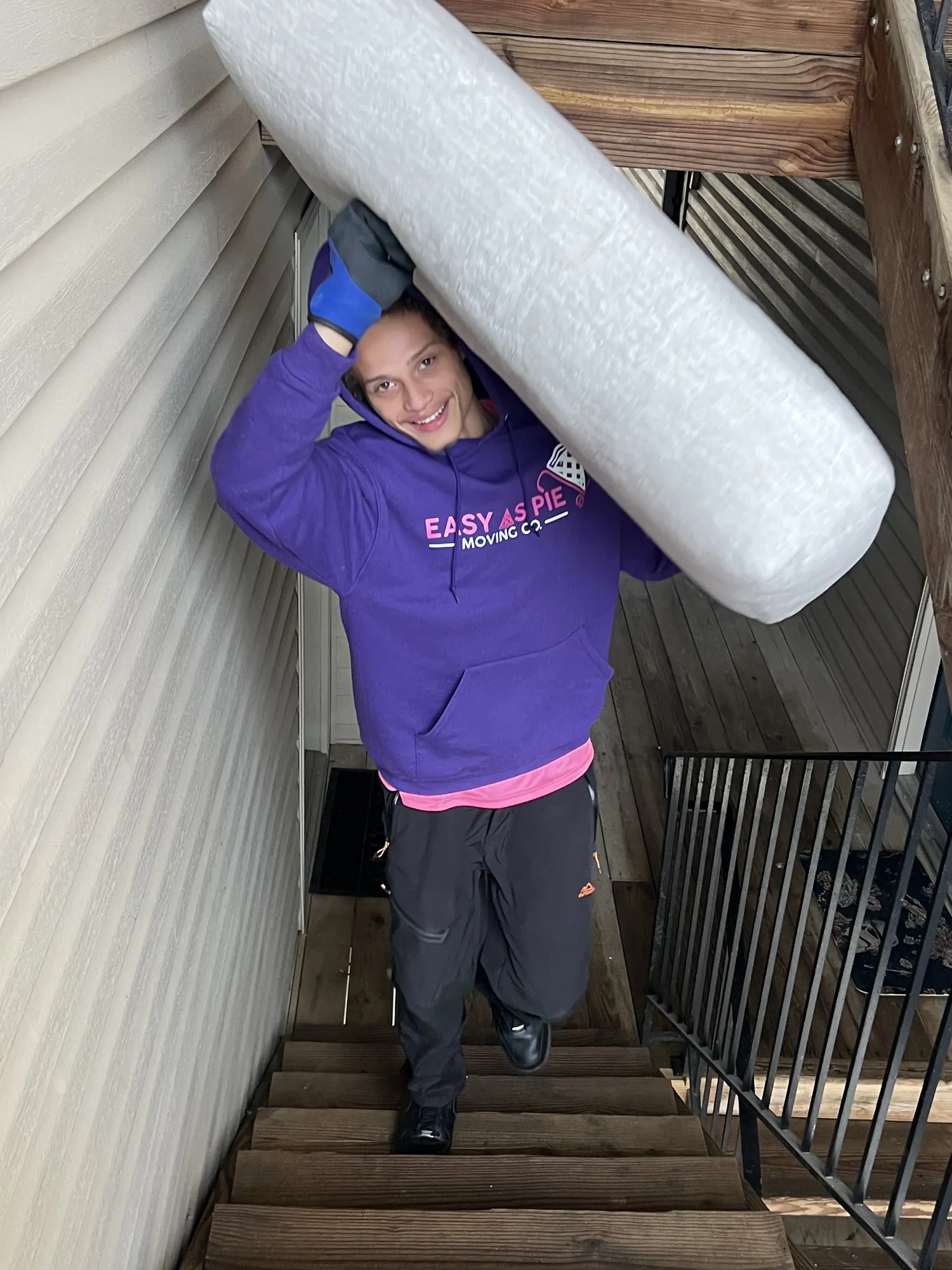
A third-floor walk-up has its charms, right up until you’re carrying a dresser up it. Moving to a building with no elevator means every box, chair and mattress goes up the stairs by hand. With a little planning, it doesn’t have to wreck your back or your weekend.
These nine tips work whether you’re moving into a walk-up, out of one or both.
1. Measure the Stairwell, Not Just the Door
The front door is rarely the problem. The turns are. Measure the width of the stairs, the ceiling height above them and especially the landings where the stairs change direction. Then measure your biggest pieces: couch, sectional pieces, box spring, dresser and desk.
A couch that’s longer than the landing is wide may need to be stood on end to make the turn, or it may not make it at all. Better to find that out with a tape measure than halfway up the stairs. If a piece won’t fit, here’s how to get rid of a couch without hauling it back down.
2. Take Furniture Apart Before Moving Day
Smaller pieces are lighter, easier to turn on a landing and less likely to hit the walls. Before the move:
- Take bed frames apart
- Unscrew table legs, couch legs and any feet that come off
- If you’re carrying a dresser or desk yourself, pull the drawers and carry them separately
- Take mirrors off dressers
- Put screws and hardware in a labeled bag and tape it to the piece
Don’t want to deal with it? Our crews can take beds apart and put them back together at the new place.
3. Pack Lighter Boxes (and More of Them)
On flat ground, a heavy box is annoying. On your tenth trip up three flights, it’s a hazard. Put heavy things like books, dishes and canned food in small boxes, and save the big boxes for light things like bedding and pillows. Fill every box completely so it doesn’t crush, but keep each one light enough to carry up a full flight without stopping.
Bins with handles are easier to grip on stairs than boxes. You can also rent plastic moving bins through our partner, Monster Totes. Our packing services also cover partial and full packing if you’d rather skip the boxes altogether.
4. Protect Railings, Walls and Floors
Stairwells are tight, and a scuffed wall or bent railing can come out of your deposit.
- Wrap furniture corners and legs in moving pads or blankets
- Cover railings where furniture will rub, using pads or cardboard held on with painter’s tape (packing tape can pull off paint)
- Lay cardboard or runners on landings and in the entryway, especially in wet or snowy weather
- Take a few photos of the stairwell before you start, so there’s no question about what was already there
5. Use the Right Equipment
The right gear makes stairs safer, not just faster.
- Moving pads or blankets to protect furniture, walls and railings
- Lifting straps for heavy pieces, used by two people of similar height
- A hand truck for stacks of boxes on the flat stretch from the truck to the stairs
- Work gloves and shoes with good grip
When two people carry furniture on stairs, the person on the lower end carries more of the weight. Put the stronger person there, and talk to each other the whole way up.
6. Park as Close to the Entrance as You Can
Every extra step between the truck and the stairwell gets multiplied by every trip. Ask your property manager where a moving truck can park, and save spots by the entrance with your own cars the night before. Check whether there’s a side or back door that’s closer to your stairwell.
Moving into an apartment? Our apartment moving guide covers building rules, parking and getting your security deposit back.
7. Clear the Path and Prop the Doors
Before anyone carries anything, walk the route from the truck to the unit. Prop open every door with a real doorstop (a box gets kicked out of the way). Move bikes, shoes and doormats off the stairs and landings. In winter, shovel and salt the outside steps, and see our winter moving tips for the rest of a cold-weather move.
Then give your neighbors a heads-up. A quick note on their doors buys a lot of patience while the stairwell is busy.
8. Pace Yourself
Stairs wear people out fast, and tired people trip. A few ground rules:
- Never carry anything that blocks your view of the steps
- Take breaks and drink water, especially on a hot summer day
- Rotate jobs so nobody makes every trip up the stairs
- Move the heaviest pieces early, while everyone still has energy
9. Hire Movers for the Heavy Stuff
Stairs are where DIY moves go sideways. If you’ve got a couch, a dresser, a washer or anything you can’t carry up a flight comfortably, bring in help, even if you handle the boxes yourself.
A few things to know when you hire movers for a walk-up:
- Ask about stair fees. Some movers charge them. Easy As Pie doesn’t.
- Stairs still add time. Tell your mover which floor you’re on at both ends and how close the truck can park, so the estimate is realistic. We’ll factor stairs into your estimate up front.
- Pick the help you need. Book moving labor for just the heavy lifting, or a full crew with a truck.
Our crews pad every piece of furniture, strap every load and walk every room with you before loading and after unloading.
Moving Without an Elevator FAQs
Do movers charge extra for stairs?
Some do. Easy As Pie doesn’t charge stair fees. Stairs add time, which we factor into your estimate up front.
How much longer does a walk-up move take?
It depends on the floor, how much you’re moving and how far the truck is from the door. Tell your mover which floor you’re on at both ends so they can plan the right crew size.
What if my couch won’t fit up the stairs?
Measure before moving day. Taking off the legs or standing the couch on end often gets it around a tight landing. If it truly won’t fit, sell it, donate it or have it hauled away.
Should I take furniture apart before a walk-up move?
Yes, if you can. Smaller pieces are lighter, easier to turn on landings and less likely to scrape walls.
What’s the safest way to carry heavy items up stairs?
Two people, a clear path, good shoes and the stronger person on the lower end. For anything really heavy, hire movers.
Moving Into (or Out of) a Walk-Up?
Tell us which floor you’re moving from and to, and we’ll send you a price range fast. There are no stair fees, and your moving agreement arrives when you book.
Request your free estimate or call (402) 200-4661.
